
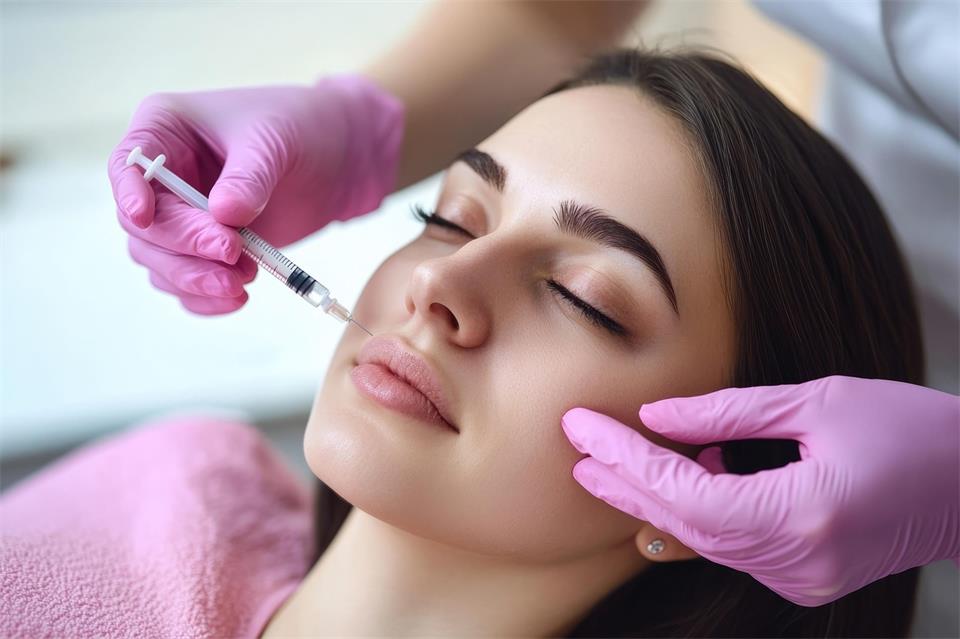
The First 90 Days Protocol for HA Filler Patients
The first 90 days after a hyaluronic acid (HA) injection set the tone for everything that follows – expectations, trust, photography standards, and re-treat timing. A conservative start with structured reviews helps clinicians deliver natural-looking rejuvenation while minimizing corrections and patient anxiety.
It also keeps the conversation focused on outcomes rather than price, and on data rather than social-media snapshots of someone else’s face.
Baseline that you can trust
Begin with reproducible imaging: fixed camera distance and lens, identical angles (front, 45°, profile), neutral lighting, and no makeup. Log the indication, target contouring vectors, and planned dermal planes. Capture a patient-reported measure (e.g., a FACE-Q domain) before touching a syringe.
Note specific concerns such as perioral fine lines, nasolabial folds, or mild midface volume loss. This documentation becomes the anchor for later decisions about wrinkle reduction and symmetry.
Visit 1 (Day 0): conservative debut session
Dose conservatively – prioritize structure and transitions over volume. Match gel behavior to plane and task: a gently cross-linked HA with a smooth texture may blend well in mobile areas; a firmer option may support lateral cheek vectors. State the staging plan out loud: subtle change today, deliberate refinement later.
Offer a simple expectation script – temporary swelling or bruising is common; we judge results after tissues settle. Using a Dermalax filler supports a cautious, two-stage debut plan; specific product selection should follow indication, plane, and injector familiarity.
When the goal is harmony rather than maximal effect, this first step builds confidence and protects against overcorrection, especially in expressive zones like the lip.
Early check-in (48–72 hours): comfort, not outcomes
A quick phone or tele-visit confirms comfort and adherence to aftercare. Invite two standardized phone photos under clear instructions (same room, same light), but avoid making aesthetic decisions while edema is evolving. Intervene only for clinical concerns.
Visit 2 (Day 14 ± 2): measured course-correction
Recreate baseline photography precisely. Palpate for irregularities, assess animation, and review the patient’s notes. If under-correction is clear and tissues are quiet, use micro-aliquots (e.g., 0.1–0.2 mL per vector) to smooth transitions or nudge contours – particularly around tear trough borders, midface vectors, or subtle marionette folds.
If residual edema remains, defer filler and re-book rather than chasing transient volume shifts. Update a brief “delta plan” for Week 6–8: what remains to be refined, and what should be left to settle.
Primary endpoint (Week 6–8): where decisions belong
This is the true outcome window. Repeat standardized imaging and the same patient-reported measure. Discuss options using shared language and data:
- Hold and bank – If the target is achieved, schedule maintenance by region mobility (the lip and perioral area often require earlier review than the midface).
- Refinement dose – Reserve tiny, targeted deposits for contour junctions or asymmetry; avoid broad re-volumization.
- Modality stack – If the patient’s priority has shifted toward “skin quality,” consider complementary approaches (e.g., superficial boosters or energy devices) instead of adding deeper filler where it is already sufficient.
This approach reframes value around visible change, comfort, and function – not price per box.
Day 90: close the loop and plan forward
A brief virtual or in-clinic touchpoint at approximately Day 90 confirms stability and reinforces home care. Document total mL used, sessions, and patient sentiment. Note regional timelines for future planning; highly mobile areas may benefit from smaller, more frequent visits, while structural zones can wait longer.
The message is simple: small, planned edits yield more durable, natural-looking harmony than episodic, large corrections.
Why this protocol builds retention
Conservative staging with explicit checkpoints reduces surprises, overfilling, and “I don’t recognize myself” reactions. It also supports transparent conversations about formulation properties without brand marketing.
Many modern HAs are non-animal in origin (bacterial fermentation), designed for biocompatibility, and available across a spectrum of cohesivity and elasticity. For sensitive planes, a gel with smooth texture and predictable integration may help you achieve long-lasting results with fewer touch-ups.
When discussing composition, a concise reminder – “this is an HA, a hyaluronic acid gel that is cross-linked to resist rapid degradation” – keeps the science front and center and helps patients understand why different products behave differently in motion.
A mini dashboard to keep everyone honest
Track, per indication: baseline and Week 6-8 photos, the same patient-reported score, total mL, number of sessions, any refinement dose, and re-treat timing. Segment by region (midface, lip, chin), by plane (supraperiosteal vs superficial dermal), and by injector. Review quarterly.
The winners are techniques that reach the target with fewer mL, fewer visits, and stable scores – regardless of sticker price. That is how a professional clinic sustains predictable beauty outcomes while staying patient-centric.
Bottom line: The First 90 Days protocol – baseline you can trust, conservative debut, smart reviews at Day 14 and Week 6-8, and a Day 90 close – keeps decision-making disciplined. It aligns language, photography, and data so that contouring, wrinkle reduction, and softening of folds are judged at the right time and place.
Patients experience steady, natural rejuvenation; clinicians keep control of dose, intervals, and expectations – one carefully documented step at a time.